A Milan office (and design icon) reimagined as sustainable, luxury residential apartments.
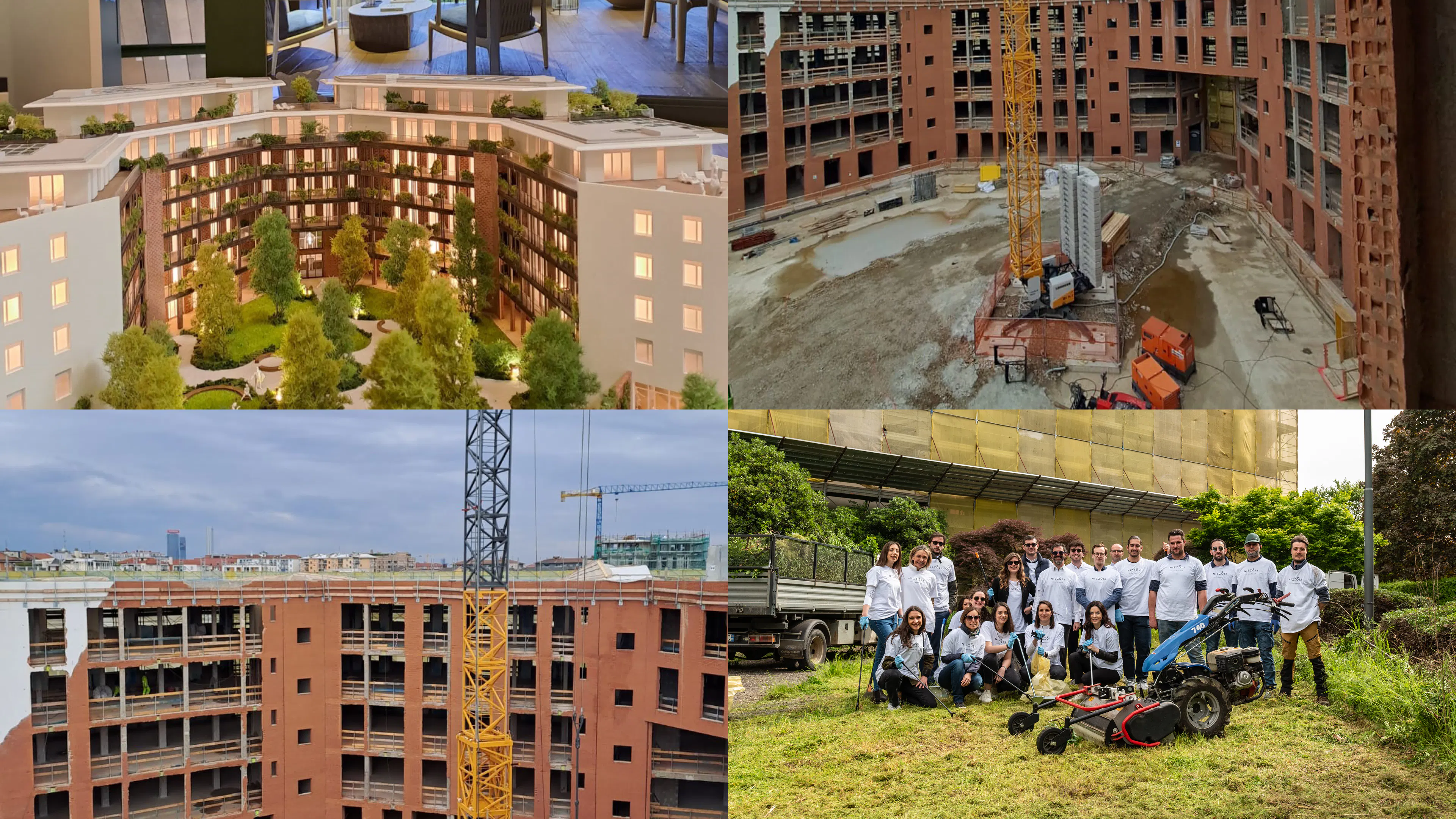
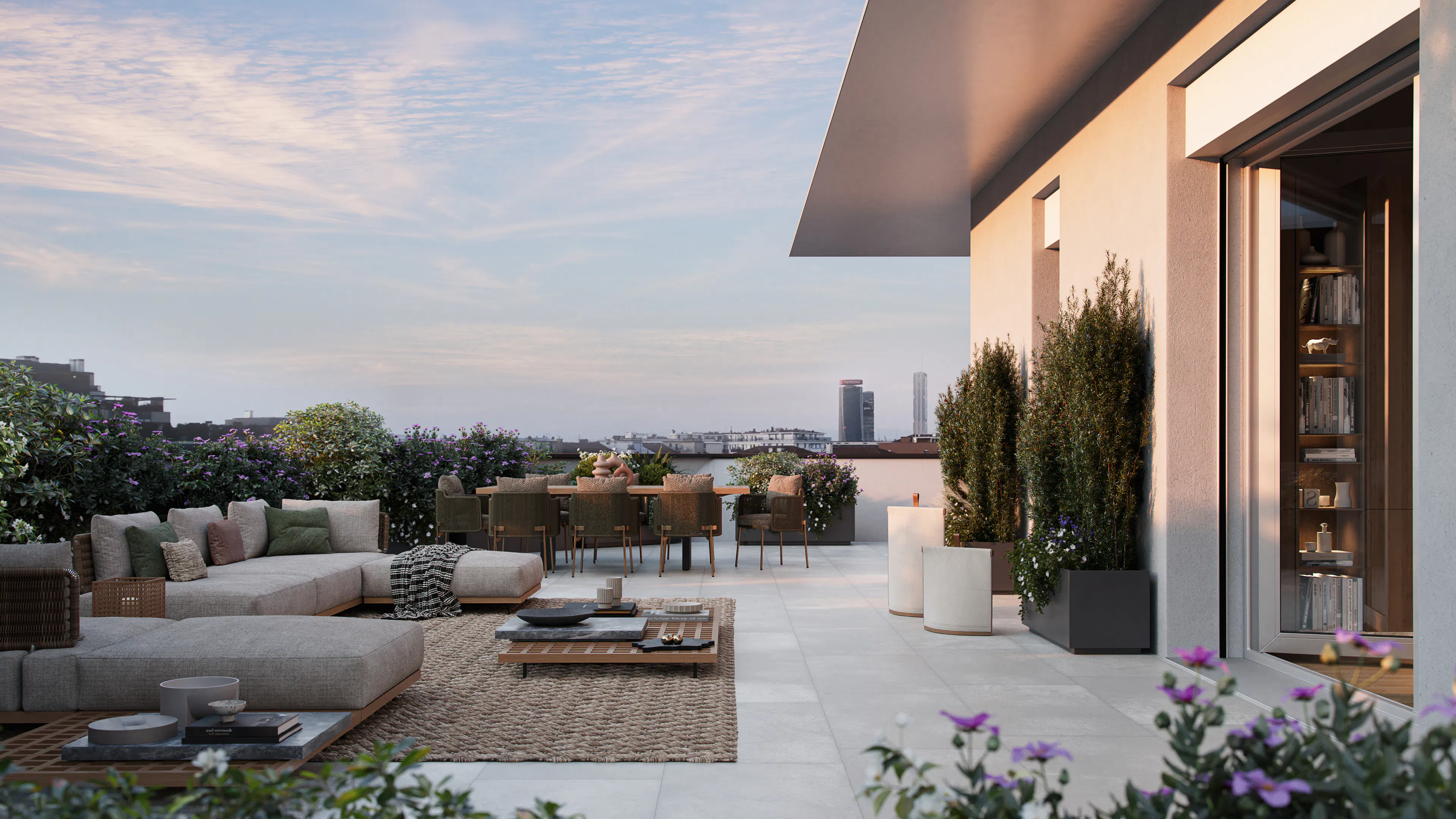
Nizzoli8 is a Milan design icon, an existing building being reimagined as a world-class sustainable residential address with something almost no other central Milan property can offer: 2,600 square metres of private, landscaped garden.
The challenge was layered. Multiple audiences, investors, asset managers, project architects, leasing agents, all needed aligning around a single positioning before the building went to market. And the market itself was complex: how Milanese occupiers perceive this part of the city differs from how the rest of Italy sees it, which differs again from the lens of international investors.
The building also sat in a neighbourhood in transition, increasingly vibrant, better connected, but not yet established like central Milan's traditional districts. The brand had to position not just a building but a location, making the case for where Milan is going, not just where it's been, while communicating the sustainability credentials of a reimagined building using the most advanced energy efficiency systems.
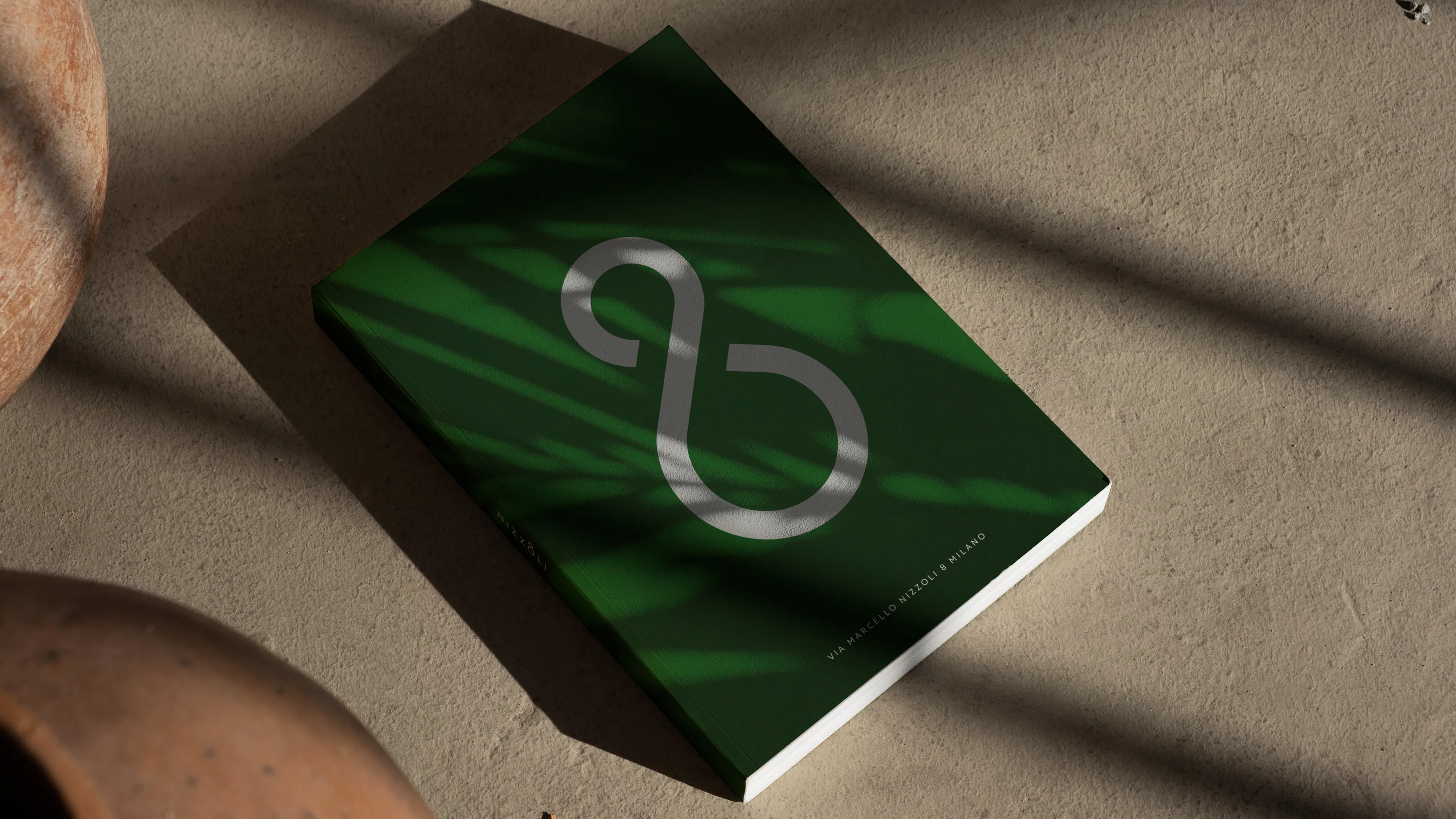
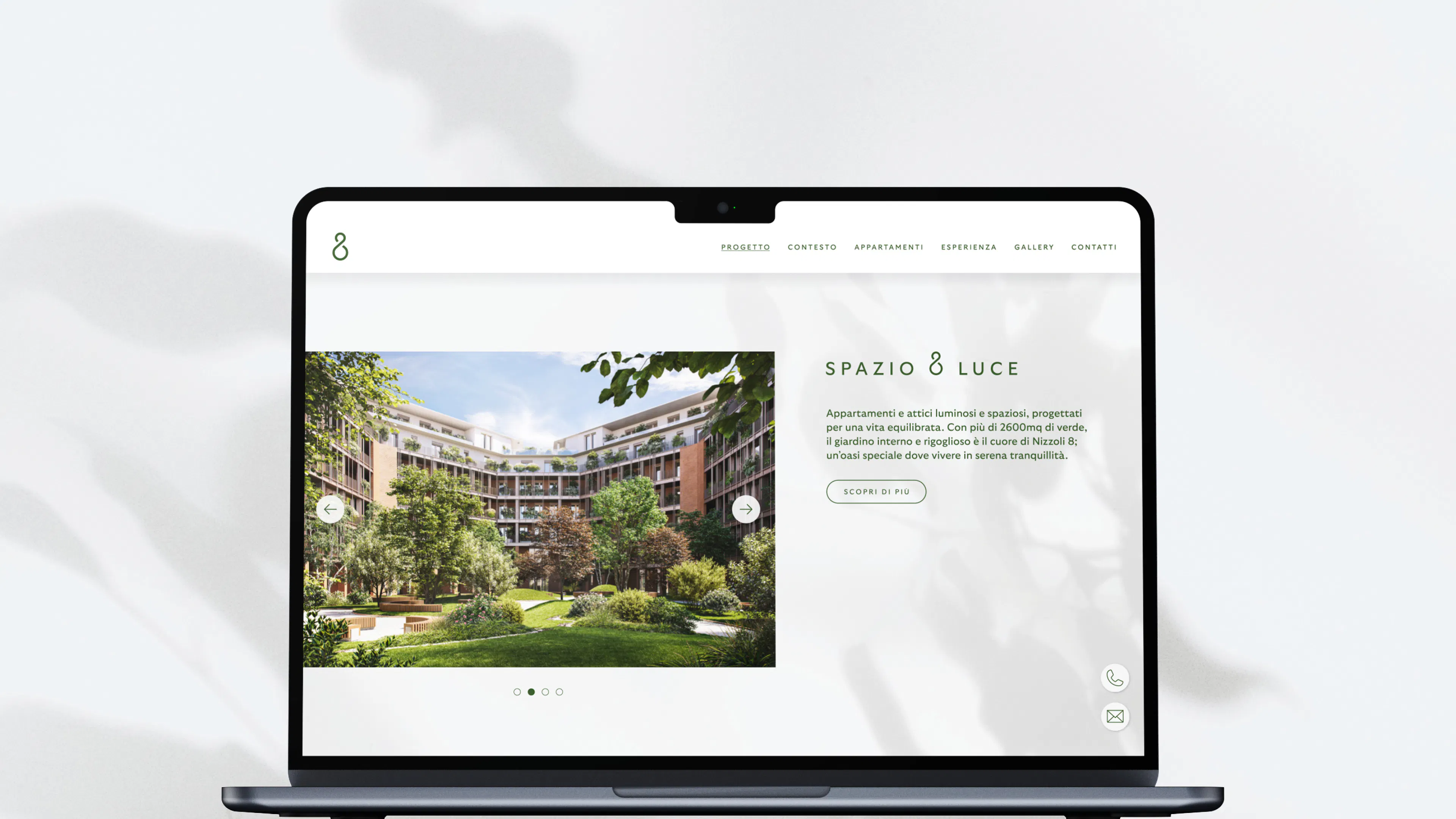
We built the brand from the ground up: positioning, naming, identity and a full suite of marketing materials designed to take Nizzoli8 from off-market conversations to public launch. The name itself, drawn from the building’s address on Via Nizzoli, gave the asset a distinctive, memorable identity that felt rooted in Milan’s design heritage without sounding corporate or generic.
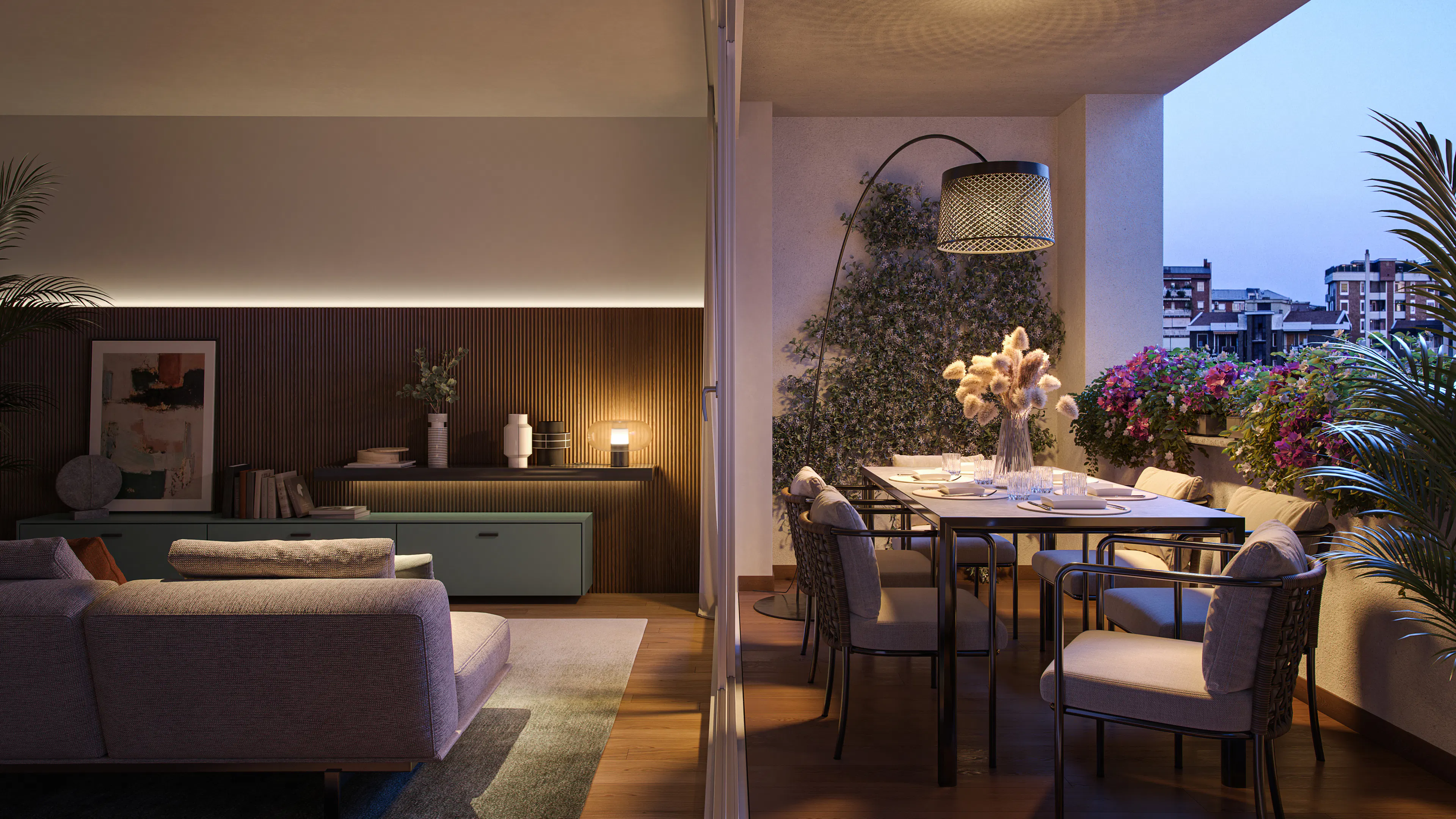
The positioning centred on what made the building genuinely rare: the private garden as a wellness and lifestyle asset in a city where outdoor space of this quality simply doesn’t exist at this scale; the sustainability story as a proof point for forward-thinking occupiers; and the neighbourhood’s trajectory as an opportunity, not a compromise. We aligned every stakeholder - investors, architects, agents - around a single narrative before anything went public.
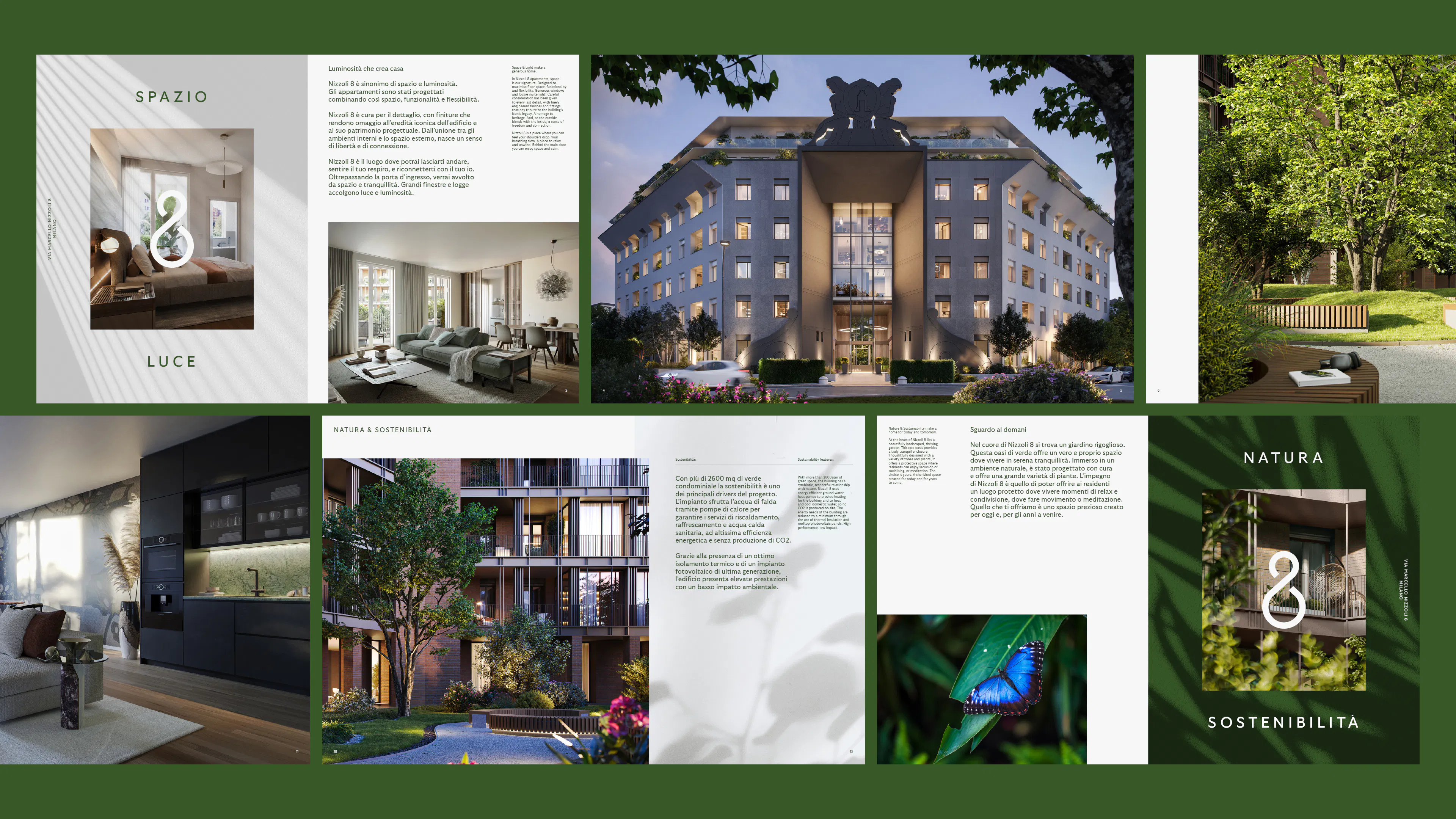
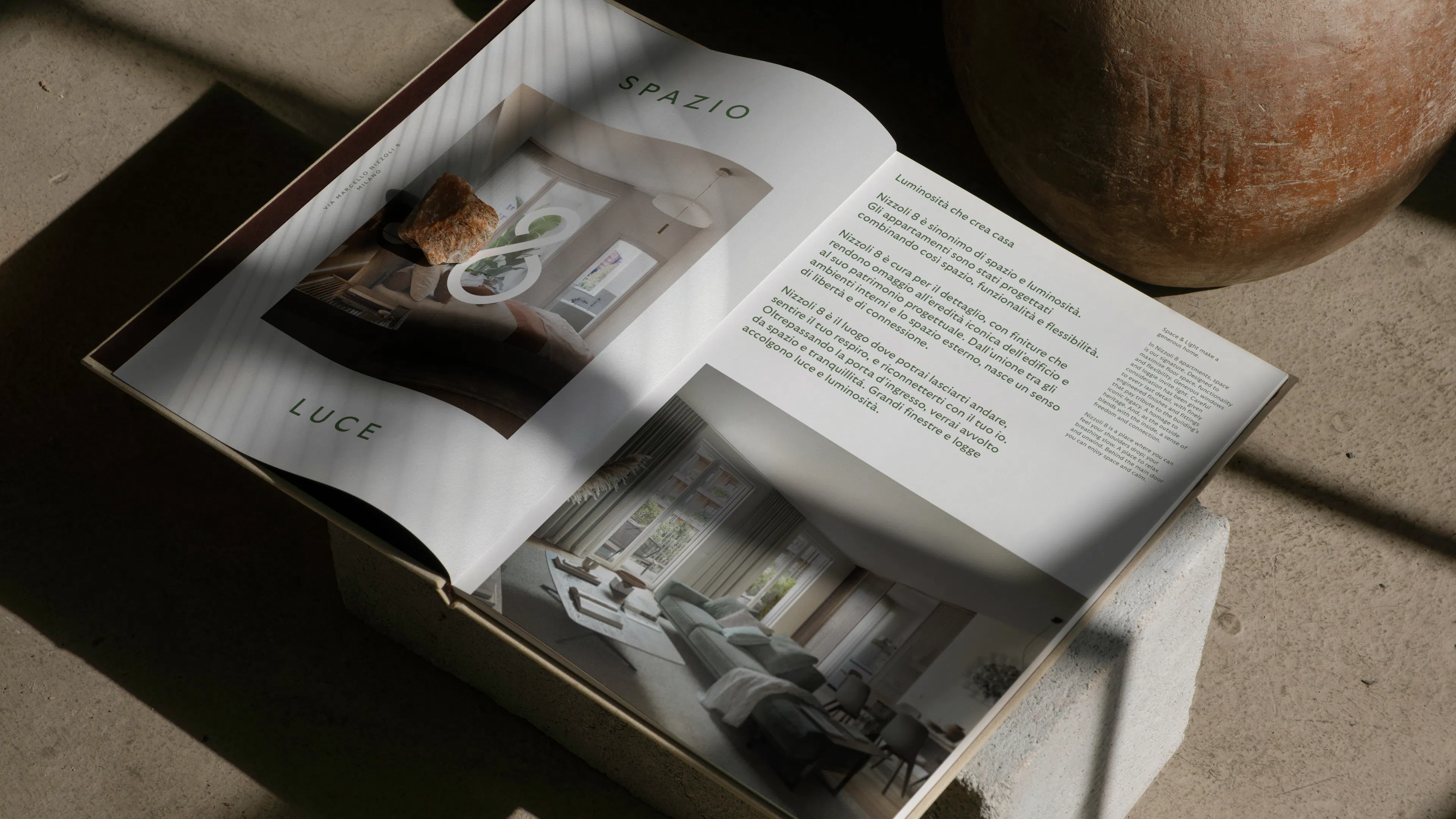
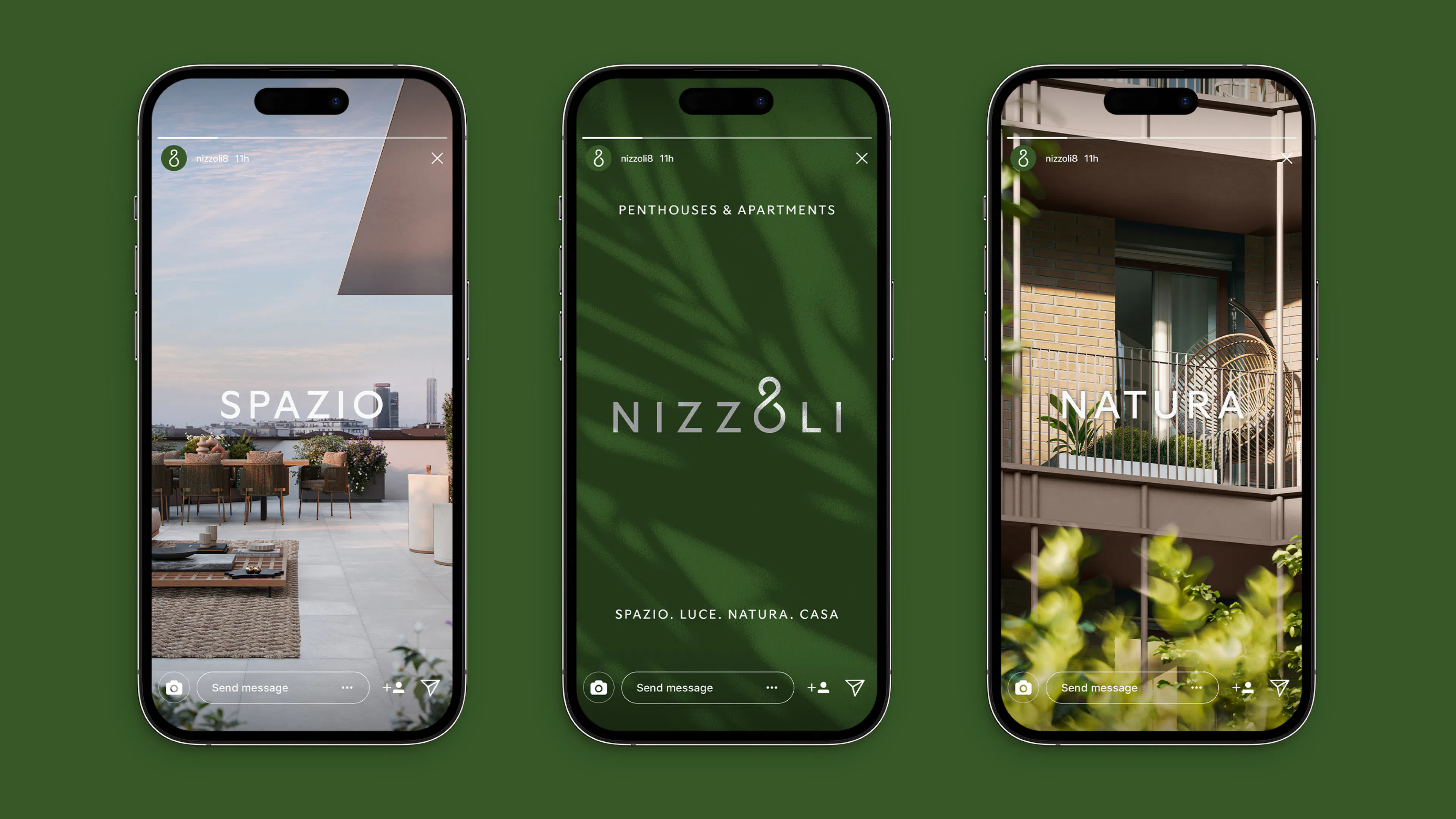
The launch was deliberately staggered. Direct email campaigns went out first, giving us data on which features and messages resonated most. We tested and optimised in real time - learning that the garden, the sustainability credentials, and the design team’s reputation were the strongest draws. Tactical events and targeted PR built on those insights, positioning Nizzoli8 within Milan’s design community and the city’s evolving commercial geography. Every touchpoint: website, brochures, floorplans, off-market materials and the marketing suite itself told a consistent story calibrated to the audience receiving it.
Nizzoli8 opened in May 2026 and wad already 50% sold. The staggered approach meant the brand was already tested and refined by the time it reached the broader market — no wasted spend, no repositioning mid-campaign.
The brand provided a clear, repeatable narrative that worked across audiences: investors heard a sustainability-led value story with strong design credentials; occupiers saw a rare combination of wellness, connectivity, and Milanese design heritage; agents had materials that positioned the building confidently against more established City locations. Every conversation started from the same place because the brand had already done the heavy lifting.
The Nizzoli8 brand was built before the building, aligning every stakeholder around a single story, giving it the clear positioning it needed to compete from day one. The building is exceptional. The brand made sure people knew it before they walked through the door.
Asset positioning strategy
Naming
Identity design and implementation
Off-market materials
Website
Email marketing
Brochures and floorplans
Full agent marketing suite
2,600m² private landscaped garden
Milan design icon
World-class sustainable building reuse
Advanced energy efficiency systems
Neighbourhood in transition
