
Do you believe in God?
Founder / Creative Director
@11:00, 16.02.2026


Scientists dream first. Invent second. Brand works the same way.
I’m mostly agnostic (hedging)
But I do believe in science - astro and quantum physics, protein folding, fusion, bioreactors. I love it. I don’t understand half of it. But it gives me hope.
Not faith in deities. Faith in clever humans. That we can fix the antibiotic mess, the climate mess and the energy mess we made for ourselves.
I’ve worked with academics and scientists. Many are suspicious of branding and marketing. They are very wary of being ‘dumbed down“. But there is a strong branding/science overlap because branding professionals and scientists are all “What if?” merchants. Scientists dream first. Invent second. Brand works the same way.
Dream First
Brand is the dream the business has to deliver. I talk about this in the “reach” blog: for a brand to work, it has to give people something to believe in, aspire to and attain.
A brand should do this every day:
1. Imagine a future
2. Build a business towards it
Very similar to what research scientists do every day:
1. Imagine a future
2. Engineer and experiment towards it
People argue about whether Star Trek “invented” mobile phones. Same for the hoverboard in Back to the Future Part II.
The pattern is basically: imagine something cool, science the s**t out of it, make it real.
Scientists don’t “believe”, but they still use symbols
Most scientists don’t believe in God, see Neil deGrasse Tyson’s talk.
And yet…
Outside CERN - a 16km underground particle accelerator smashing protons together at near the speed of light, there’s a two-metre bronze statue of Shiva (Nataraja). It was a gift from the Indian government, used as a metaphor for the cosmic dance of particles: creation and destruction, endlessly looping.
The best symbol a bunch of scientists could come up with for what they do was something that, to a large extent, none of them literally believe in.
But it works. Because metaphor is a shortcut to meaning, poetry and emotion. The irrational stuff. And we run on meaning.


Harwell — where collisions create futures
Dream job - work on a brand idea for Harwell Oxford.
Harwell Campus has a collection of big science research - pharma, energy, space. There’s a particle accelerator (smaller than CERN’s), and they process vast amounts of CERN data too - like all great science places, it doesn’t care for borders.
When you get that density of scientists and entrepreneurs, you get collisions. Interesting ones. Useful ones. Collisions that turn into progress and businesses that need employees who need homes. Particles build places.

We expressed Harwell Campus’ brand idea as: Brilliance Every Day.
An example (my favourite Harwell story - because it’s basically sci-fi made real)
An engineer from the European Space Agency working on low earth orbit stuff sits down to lunch with a bioscientist looking at genes.
They hatch an idea: grow stem cells faster in zero-g. Because less energy spent fighting gravity = more energy available for growth.
Organ factories in space. A dream? Science fiction? Speculative fiction? Yes.
Reality? Almost.
That’s the point. The line between “what if” and “we did it” is thinner than we admit.

Britain doesn’t need another strategy. It needs a dream
For the UK to get moving again, we need to dream big. Bigger than the USA and China. Bigger and bolder. We’re allowed to. We have Harwell Oxford. Cambridge. Birmingham University. My nephew sent me a picture or a sunspot he’d taken as part of the astrophysics degree he’s studying at Newcastle.
Dreaming isn’t a guarantee of success, which is exactly why politicians don’t (can’t) do it. They can only see to the next election. The exception of course is JFKs we’re going to the moon by the end of the decade speech.
But universities can dream. Research campuses can dream. Investors can dream.
Big.
We’ve dreamt before. At the Crystal Palace and the Festival of Britain: optimism made physical. Not a slide deck. A statement you can walk into.
The one that got away
Which brings me to the pitch I lost — the one I really wanted.
University of Birmingham.
We put together a great pitch. I pulled in brilliant consultant friends to bolster our education credentials. We went up, presented the story, the team, the logic.
Then I got asked this question:
“If you had to sum up the University, how would you do it…?”
I knee-jerked a ten-thousand-hours-of-experience answer:
“Friendly Terminator.”
A bit pop-culture for the very academic panel around the table, sure. But I meant: industrial, unstoppable, future tech… but human.
On the walk out, I realised what I should have said: the Iron Giant. Ted Hughes. Big, powerful, but kind. More literary.
And then I walked past the Eduardo Paolozzi’s sculpture of Michael Faraday in the middle of the campus, a huge cast-iron icon of humanity, imagination and industry. I should have said “You’ve already got it, it’s outside in the square.“
We didn’t get the gig. Birmingham played it safe with their rebrand. It might be going brilliantly for them. I hope it is. But they missed an opportunity - a chance to be Europe’s MIT.
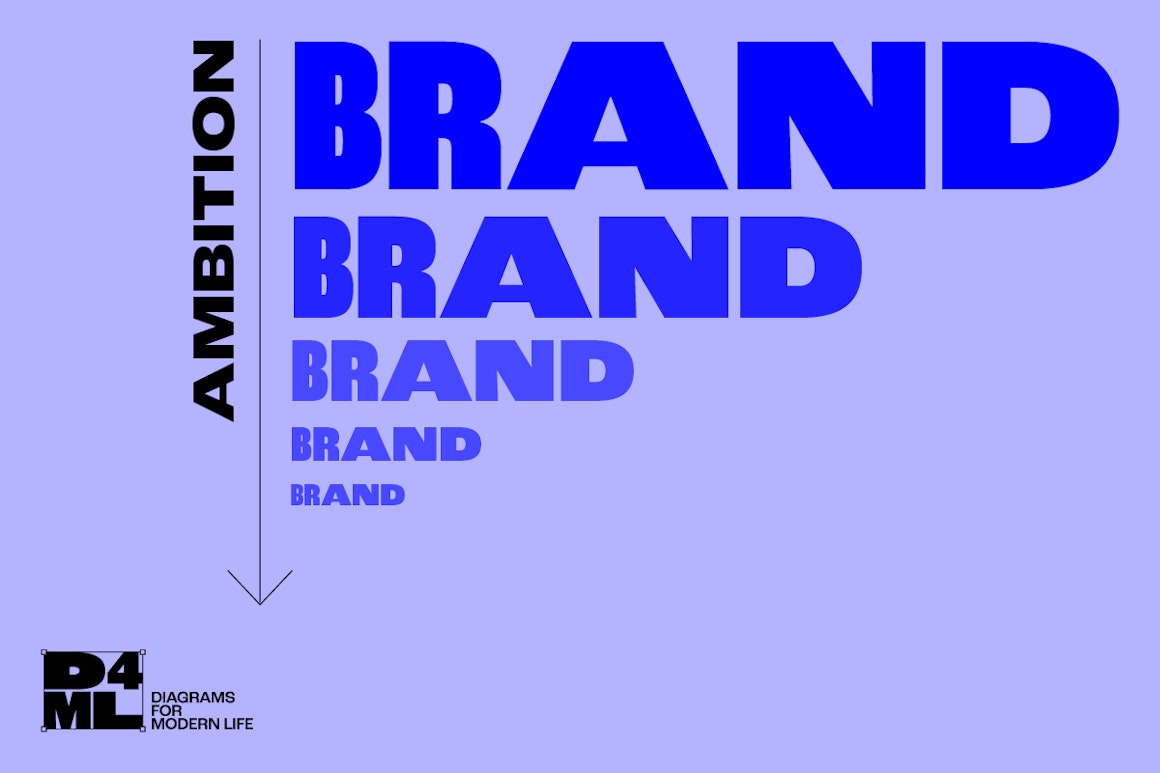
And this is the bit nobody likes hearing: brand is always an expression of leadership ambition. When ambition shrinks, brand shrinks with it. The UK feels a bit shrinking at the moment.
What to do next
The real problem isn’t capability. It’s belief. The UK builds extraordinary things. But we’re not making enough noise about it.
We rarely package ambition in a way that makes people feel it - politicians, investors, talent, founders, the public. No one’s talking about a dream. Silicon Valley Tech bros do. They talk about making humanity an interplanetary species.
Innovation doesn’t spread through rational arguments alone. It needs theatre. Places and countries win when they become magnets, not “sites”. Not fortresses.
If you want an innovation district or campus to matter, it can’t just be a collection of buildings with world class facilities and gym and good ESG credentials.
It needs to feel like a destination, physical and metaphorical. A place with gravitational pull. Somewhere people choose to be - not just somewhere they’re contractually required to turn up.
Somewhere you really want to be - and spend a lot of time, full of excellent people.
A kind of heaven I suppose.